Introduction: Alain Delon, Then and Now
Nick Rees-Roberts and Darren Waldron
Few male European actors have been as iconic and influential for generations of filmgoers
as Alain Delon. In his heyday in the 1960s and 1970s, he was emblematic of a
modern
masculinity and a distinctive European
style, a symbol of French elegance.
Delon’s appeal has spanned cultures and continents, reaching as far afield as East
Asia,
where young men have imitated his look and mannerisms. From his break-through as the first onscreen
Tom
Ripley in
Plein soleil/
Purple Noon (René
Clément, 1960), through two legendary performances for Luchino
Visconti in
Rocco e i suoi fratelli/
Rocco and His Brothers (Luchino Visconti, 1960) and
Il gattopardo/
The Leopard (Luchino Visconti, 1963), to his roles as the laconic anti-heroes in three of Jean-Pierre
Melville’s most celebrated film noirs—
Le Samouraï/
The Samurai (Jean-Pierre Melville, 1967),
Le Cercle rouge/
The
Red Circle (Jean-Pierre Melville, 1970), and
Un flic/Dirty
Money (Jean-Pierre Melville, 1972)—Delon came to embody the flair and stylishness of the
European cinema of the period. He was particularly associated with the French
polar or crime film; his appearances opposite Jean
Gabin
in Henri
Verneuil’s
Mélodie
en sous-sol/
Any Number Can Win (Henri Verneuil, 1963) and
Le Clan des Siciliens/
The Sicilian Clan (Henri Verneuil, 1969) and alongside
Jean-Paul
Belmondo in a nostalgic revision of the Marseille criminal
underworld of the 1930s
Borsalino
(Jacques
Deray, 1970) bolstered his image as one of France’s
most recognizable and popular film stars.
A critical consensus has formed around the myth of Delon as a fragile but cruel beauty.
The use of Delon’s photogenic face and slim body to advertise
Plein soleil
at the
start of his career was spectacular. The young actor became a
movie star because he was seen as naturally beautiful—his
smooth skin, piercing blue eyes, symmetrical face and delicate
nose, luscious hair and slim torso, all visually embellished
by directors and cinematographers. Delon’s glamorous lifestyle
added to his appeal. His tempestuous relationships, particularly
with actress Romy Schneider, fuelled the celebrity gossip of the
early 1960s. Delon
epitomizes an ambiguous masculinity. His macho roles and archetypal playboy image were
mitigated by his refined features and troubling gaze. In contemporary France, Delon is a contested and ambivalent figure,
his likeability tarnished by his bombastic declarations, reported extremist politics, and pompous self-promotion. He made
the cover of
Le Figaro Magazine
in July 2013 and was included in a feature article on shifting models of masculinity, in which the aging star berated the
gradual loss of gender
differences and the recent French same-sex
marriage legislation (
Haloche 2013, 32–34).
Given
its spectacular prominence and problematic nature throughout the
actor’s
career, the issue of masculinity is a central critical inquiry in
this collection. Delon’s youth included a prolonged
period of military service in the French army in the early 1950s.
He was born on November 8, 1935 in Sceaux, a middle-class
suburb south of
Paris.
Following his parents’ divorce in 1939,
he was placed with foster parents and then sent to various
Catholic boarding schools, from which he was expelled. A turbulent
youth, Delon signed up for military service in the French navy
aged 17 and was posted to
Saigon
toward the end of the
Indochina War. Looking back, he claims that
this limited, but nevertheless formative, experience of war as a young man shaped his military temperament, providing him
with rigor, discipline, and a sense of duty (
Jousse and Toubiana 1996,
27–28). On his
return to France, he lived in Pigalle in north
Paris, allegedly using his charms to make ends meet (
Dureau 2012, 11). But it was in
the Paris left bank of the postwar years where the ambitious rising star was noticed, where he met young actors Brigitte
Auber and Jean-Claude
Brialy,
with whom he left for the
Cannes Film Festival in May 1957. Spotted
by David O.
Selznick’s talent scout, he was immediately sent
to
Rome to
perform a screen test for the producer, who offered him
a golden seven-year studio contract, provided he improved his
spoken English. In a surprising decision that later sealed his
fate in Hollywood, where he failed to make it in the mid-1960s,
Delon returned to Paris, becoming the lover of Michèle
Cordoue, the wife of film director Yves
Allégret,
who cast him in a minor role as the hit-man Jo in
Quand la femme s’en mêle/
Send a Woman When the Devil Fails (Yves Allégret, 1957). Delon’s early roles,
up to his breakthrough in
Plein soleil in 1960, tended to emphasize either an element
of sexual availability or youthful bravado—he was a playboy in
Faibles femmes/
Three Murderesses (Michel
Boisrond,
1959) and a schoolboy in
Le Chemin des
écoliers/Way of Youth (Michel Boisrond, 1959).
Film scholars Ginette
Vincendeau
and Guy
Austin have argued that Delon’s early persona was a
historical product of advertising in the context of postwar
economic modernization. Vincendeau situates Delon’s body as a desirable, publicity-driven
commodity, a product of 1960s
consumerism (
2000, 158–195). Austin reads
Delon
in contrast to his contemporary Jean-Paul
Belmondo, highlighting his
image as a remote outsider as key to his seductiveness for his audiences (
2003, 48–62). Our collection extends the existing scholarship on the Delon persona,
which also includes Graeme
Hayes’s account of the actor’s
spectacular masculinity (
2004, 42–53), to consider
historical, textual, and theoretical readings of Delon’s career, image, and persona, including a particular focus on
the star in the context of
transnational
cinema culture and on the
global reception of his image. Hence, the collection includes
contributions, not only on Delon’s iconic performances,
his famous affiliations and masculine image but also on less well
documented aspects of his career, such as his early films
of the 1950s; his international, English-
language performances in
the mid-1960s; his role as director, producer, and screenwriter; his later career on and off the big screen; his enduring
role as
style icon and his intermittent contributions to
popular music. Before we provide
an overview of the book’s rationale and orientation, it is worth situating Delon in relation to existing discourses
of stardom and to the critical reception of his career in and beyond France.
Austin defines film stars as commodities—“brand names, whose capital
is their face, their body, their clothing, their acting or their life style” (
2003, 2). Following Richard
Dyer’s lead
(
1998 [
1979]), Vincendeau defines them simply as “celebrated film performers who develop a ‘persona’
or ‘myth,’ composed of an amalgam of their screen image and private identities, which the audience recognizes
and expects from film to film, and which in turn determines the parts they play” (
2000, viii). Dyer’s original account of the golden age of Hollywood stardom
emphasized the semiotic
values and affective embodiment of classic
film stars, their images or personae deriving from the “complex configuration of visual, verbal and aural signs.”
Star images, Dyer argued, “function crucially in relation to contradictions within and between ideologies, which they
seek variously to ‘manage’ or resolve” (
1998 [
1979],
38). Dyer’s
description of the contrived projections of individual glamor,
exclusive lifestyles and conspicuous consumption, juxtaposing
the spectacular with the everyday (
1998
[
1979],
39–43), drew on a previous
account of stardom that had also bound the subject to consumer
culture, seeing stars as mythic models of consumption for their
fans to imitate.
Edgar
Morin’s early
writing on stardom and
popular culture coincided with Delon’s
rise to fame in the late 1950s and early 1960s. Morin’s 1962
L’Esprit du
temps (
2008), presented as an essay on
mass culture, engaged
with many of the methodological questions that were to set the (more politicized) agenda for
Anglo-American
Cultural Studies in the decades to follow: the representation, value, and audience reception of emerging forms of popular
culture (
Macé 2008, 7–15). Morin’s
earlier groundbreaking inquiry from 1957,
Les Stars/Stars,
had elevated film stars of
the silent period to the status of icons, attributing them with
quasi-mystical auras, seeing them as early twentieth-century
equivalents of ancient divinities (
1972,
36–64). The semiotic-cum-anthropological study of
screen
myths
was, for Morin, located somewhere in the gray zone between belief
and entertainment. But, as Austin observes, with the advent
of sound
cinema, there was a gradual shift toward the bourgeois accessibility
of stars, “seen in villas, apartments and ranches. Magazine spreads feature their homely lives, their bourgeois interiors,
their ordinariness” (2003, 3). Morin’s multidimensional account of stardom attempted to juggle
critical
attention to form, reception, production, and social context in an
endeavor to
translate the appeal and worth of individual film stars to
audiences and fans. In his preface to the third edition in 1972,
Morin retrospectively regarded the 1960s as central to the
development of European stars such as Delon, Brigitte
Bardot, and Catherine
Deneuve,
through the postwar economic
boom
that was conducive to the creation
of a local star-system fashioned around the beauty, glamor, and
lifestyles of the chosen few. The on-screen Delon, the icon
of a bracingly
modern masculinity (following the release of
Plein soleil in 1960) became so powerful off-screen through the decade that he was able to
launch his own production company (Delbeau, later
Adel Productions),
coproducing and starring in
L’Insoumis/
The Unvanquished
(Alain
Cavalier, 1964), thereby having greater control in choosing
his partners, screenwriters, directors, and coproducers. Delon’s
financial
worth outstripped that of Bardot, Belmondo, and Deneuve, making him the highest earning box-office star of
French cinema of the decade (
Morin 1972, 11).
Historically, film stardom has relied for effect on the eroticization of the human
face through the technological means of the close-up (
Morin 1972, 120). The idea that the young Delon was troublingly beautiful has been articulated by many of the actor’s
screen partners: Annie
Girardot comments that Delon’s “insolent
beauty” did not go unnoticed on the streets of
Milan during
the filming of
Rocco in 1960; other men would turn in admiration at the sight of Delon
and co-star Renato
Salvatori walking arm in arm like members of a
Sicilian clan (
Dureau 2012, 29). Claudia
Cardinale
locates the actor’s beauty in his glacial gaze, restless physique, and ironic character; he was self-confident, sure
of his
beauty, charm, and sexual allure
(
Dureau 2012, 38).
Critics have concurred that his youthful physique and facial perfection shaped the Delon myth of the performer as a cruel
beauty: “the association of Delon’s beauty with sadism is so recurrent that the conclusion is inescapable: it
is his beauty itself, in its excess, which is cruel” (
Vincendeau 2000, 176). Equally,
Austin has described the actor’s fragile face as signaling a move beyond machismo, concerned with doubling and mirroring,
notable examples of which include the disavowed homo-narcissism in
Plein soleil (
Straayer 2001;
Williams 2004) but
also more subtle takes on narcissism in
Mr. Klein (Joseph
Losey,
1976) and Jean-Luc
Godard’s ultimate statement on the star’s
split image in
Nouvelle Vague/
New Wave (1990), in
which he replaced one vulnerable Delon with his more assertive and manipulative twin. Delon’s eroticized image remained
“literally self-regarding” (
Austin
2003, 62) even in the “gloomy fatalism” of a character like Klein. Losey’s disturbing
narrative of doubling and imagery of mirroring balanced a passing nod to the actor’s
former pin-up status with a darker revision of Delon’s self-image (it remains
self-referential
and inward-looking nonetheless), while Godard stripped the preestablished Delon persona away altogether.
As a promising (though as yet untested) young actor in the late 1950s, Delon’s
natural gifts—his ambivalent gaze, dynamic allure, and magnetic charisma—made him perfect for the charmingly ambiguous
killer
Tom
Ripley in
Plein soleil, a disturbed young man obsessed with surface image (
Figure 1). He was initially cast as the millionaire playboy Philippe Greenleaf, Ripley’s victim, but
convinced the director to risk giving him the lead. The young star’s pretty face
was a mask
for the actor’s technical
versatility;
his angelic boyishness would also suit the naiveté of the good son Rocco, the role he played straight after Ripley.
Beyond the combination of tenderness and harshness, it was Delon’s athletic body—his slim silhouette, imposing
gait, and agile movements—that evoked the dynamic restlessness associated with a
modern
model of masculinity based on an ideal of
European elegance. The problematic
obsession with the actor’s beauty when playing evil characters such as Ripley has led critics to posit an uglier edge,
even a quasi-fascistic identification (
Darke 1997), echoing
Visconti’s inquiry
as to whether Tancredi, the character played by Delon in
Il gattopardo/The Leopard, would
in fact have become a fascist by the early twentieth century.
The actor was visually striking in the role of the prince’s opportunistic nephew in Visconti’s lavish adaptation
of Giuseppe
Tomasi di Lampedusa’s 1958 novel, set in
Italy of the mid-nineteenth century (
Figure 2).
Tancredi first appears on
screen as a startling reflection in his uncle’s shaving mirror;
the actor’s photogenic face, filmed without make-up,
is prominently displayed before his body. The director was
allegedly passionate about the actor, placing the relatively peripheral
character (the cynical careerist; a man of his time unlike the
fading prince) at the political heart of the film (
Servat 2000, 73). The idea that Visconti symptomatically sublimated his desire for Delon through the
embellishing
cinematography of both
Rocco
e i suoi fratelli and
Il gattopardo—as he is said to have done previously
with Massimo
Girotti in
Ossessione/
Obsession (Luchino Visconti, 1943)—has been questioned as a reductive assumption, underestimating
the more complex ways in which screen technologies direct and codify visual pleasure to stabilize a hetero-normative gaze
(
Duncan
2000, 103–104).
Morin remarked that the stars
of 1960s
European cinema, such as Delon,
Bardot,
or Cardinale, were able to move between popular entertainment
genres and the contemporary director’s cinema that aestheticized
the social life of the period (
Morin 1972,
154). But from the 1970s onward, Delon’s box-office success at playing tough guys (either cops or hit men) was such
that audiences preferred to lock him into the macho crime
genre, thereby
undermining his more ambivalent dramatic performances in films such as
Mr. Klein, La prima notte
di quiete/Indian Summer (Valerio
Zurlini, 1972) or
Notre histoire/
Our Story (Bertrand
Blier,
1984), performances for which Delon was cast against type,
subverting his popular, assertively masculine persona. The commercial
failure of Zurlini’s fatalistic professor or Blier’s alcoholic
mechanic was due, in Delon’s account, to
the audience’s reluctance to accept him as an unhappy loser. “For
my
audience,” he laments, “Delon is automatically a hero of good or evil. He must
be
a winner, not a loser …. This is the image of Delon that is expected” (
Dureau 2012,
77). For
Delon as producer, this meant appearing in gunslinger movies to be
able to finance the more culturally prestigious films that
showed off his considerable acting talents, such as
Mr. Klein, for which he lost his
investment (
Servat
2001, 64). The
critical reception of Delon’s career supports
the actor’s own
perception of an entrenched division between
the films he made with a number of “master” directors (his term for the
formative
collaborations with
Clément, Visconti,
Melville, and Losey) and a prolific career in genre cinema that maintained his popularity.
An account of Delon’s stardom, published in
Positif in
2012
(
Cieutat 2012), highlighted not only his physical and
technical versatility
as a performer—the
good looks, elegant movements, and precise
gestures—but
also
the surprisingly broad range of roles across a career spanning
some 50 years: from the ambitious heroes and fragile victims
to the more overlooked comic roles, such as his early light-footed
performance in a comedy about Italian
anarchism,
Quelle joie de vivre/
The Joy Of Living (René Clément,
1961).
The
cinéphile reception of Delon’s
career dates back to an initial homage to the actor’s work hosted by the
Paris
cinémathèque in 1964, for which Henri
Langlois
raised the actor to the status of “greatness.” A later retrospective held in 1996 was an opportunity for the intellectual
film journal,
Cahiers du cinéma,
to assess Delon’s singular place within the landscape of French and international cinema; the actor was perceived as
the only French male film icon of the
postwar period, known locally
as the “French James
Dean.” In terms of roles in classic
films, Delon was on par with his near contemporary Marlon
Brando,
whose instinctive technique and gestural precision were similarly influenced by an earlier actor, John
Garfield, the modern precursor of
method
acting, also known for playing brooding rebels (
Jousse and Toubiana 1996,
27). Delon’s naturally graceful way of gliding through the
frame
broke with the more overtly theatrical
style of 1950s French screen
acting; in his debut role in
Quand la femme s’en mêle in 1957, his slim body
and edgy movements marked him out from the established leading men of the 1950s such as Jean
Marais
or Henri
Vidal. The incongruous sequence in
Plein
soleil in which Delon is filmed strolling nonchalantly around
Naples
fish market documented the actor’s idiosyncratic presence on the French cinema screen of the period, much like his female
contemporary,
Bardot, whose physicality and
fashion-sense
also marked her out for audiences as resolutely modern (
Figure 3). An out of character
sequence spliced into the
narrative for no reason other than visual
pleasure, the scene illustrates how the actor’s early films enshrined him as a rising star simply by documenting his
spontaneous presence in front of the
camera. It was this subtle illusion
of naturalness—a performance that seemed to position the actor at the creative center of the film—that marked
Delon out (in the eyes of Langlois) as an enduring star.
However, Delon has not always been held in such high esteem. In 1982, critic Serge
Daney attacked the actor’s formulaic star-vehicle, the crime
thriller
Le Choc/
The Shock (Robin
Davis, 1982) as symptomatic of the implosion of the French star system, one in which Delon’s
apparent
narcissism overwhelmed the entire production. Rather than
relying on the classic close-up to illuminate
his stardom,
Delon no longer bothered acting at all (according to Daney) but
rather reproduced his familiar
screen repertoire in a film structured as a series of adverts to showcase his
versatility
(
Daney 1998, 159). The idea that Delon had become a
caricature of himself (widely known for immodestly talking about himself
in the third person) is one that gained currency as the star’s glory waned through the 1980s and early 1990s, despite
notable roles in
auteur films such as
Nouvelle
Vague that self-reflexively deconstructed his persona as a quotable text (
Morrey 2005, 174). The
middle and later stages of Delon’s career were indeed punctuated by a series of complex
dramatic roles (particularly the overlooked performances in
La prima notte di quiete
and
Mr. Klein in the 1970s) that actively sought to dismantle the cliché of fatal
beauty and spectacular narcissism so redolent of his earlier work and the macho archetype of his
crime
films. Delon’s talent as a dramatic actor was only belatedly recognized through the
César
award for best actor in 1985 for his character study of the wayward mechanic Robert in
Blier’s
absurdist
comedy-drama
Notre histoire, which exposed him to a younger generation of actors such as Nathalie
Baye, Gérard
Darmon,
Jean-Pierre
Daroussin, and Vincent
Lindon.
Yet, while the international
distribution
of Delon’s later films
focused almost entirely on his work for acclaimed directors, his
enduring image in France has been sustained by regular appearances
in more
popular
genres, particularly roles in comedies such as
Le Retour de Casanova/
The Return of Casanova (Edouard
Niermans, 1992) and
Une chance sur deux (Patrice
Leconte,
1998), sharing the screen once more with Jean-Paul
Belmondo, and in
a self-mocking cameo playing Julius Caesar in the third installment of the live-action Asterix franchise,
Astérix aux jeux olympiques/Asterix at the Olympic Games (Frédéric
Forestier and Thomas
Langmann,
2008). Since the start of the century,
Delon’s public profile
has extended beyond cinema to include roles on the
Paris stage, co-starring
with his daughter in
Une journée ordinaire/
An Ordinary
Day in 2011 and in TV mini-series
Fabio Montale (2002) and
Frank Riva (2003–2004), which both echoed and perpetuated his established cinematic image as the solitary
cop or tough guy.
The
fictionalization of his
screen persona in Benjamin
Berton’s humorous novel
Alain Delon est une star au Japon/
Alain Delon is a Star in Japan in 2009, in which two crazed fans kidnap their idol, and his surprising cameo
appearing as himself in a Russian seasonal
rom-com,
новым годом, мамы!/
Happy New Year, Moms! (Sarik
Andreasyan,
Artyom
Aksyonenko and Anton
Bormatov,
2012) both acknowledge the star’s continued appeal beyond
Western
Europe. One of the key concerns of this book, beyond our
historical examination of the star’s evolving place within
French cinema, is to illustrate the inherent limitations of a
singular approach to film stardom by considering Delon’s
work beyond France as well as domestically. The collection begins
with two chapters that engage theoretically with Delon’s
career in terms of image, agency, and performance. Darren Waldron
tackles the question of male objectification and narcissism
attendant to the representation of beautiful male
film stars like
Delon, using an existentialist understanding of “agency” to inquire how some of the actor’s most emblematic
roles might be read as attempts to negotiate his own problematic positioning as an object of desire.
Laurent Jullier and Jean-Marc
Leveratto
also reference Delon’s mythical status as pin-up but situate his career in relation to the sociological concept of
emploi, or the tension between the
embodiment and identity of the individual performer, the role he is playing and the audience’s own framing of his persona.
The following four chapters proceed roughly in chronological order, offering textual
and historical investigations of different locations and periods of Delon’s career: Gwénaëlle Legras examines
Delon’s early
media profile, showing how he was positioned between
the generic traditions of French cinema of the late 1950s and the modernity that he was seen to represent both physically
and stylistically. Catherine
O’Rawe takes
Visconti’s
Rocco as an extended case study of
the young
Delon
within the cross-cultural context of Franco-Italian coproductions
of the period, with their practice of dubbing the original
voice-tracks into Italian.
O’Rawe
unpacks the cultural and linguistic factors involved in dubbing to
assess how the practice supported or undermined the director’s
famous objectification of Delon. Leila Wimmer focuses on Delon’s
crime
persona in the popular films he made partnering the most emblematic French male screen icon of the prewar era, Jean
Gabin, highlighting the question of generational transmission through two conflicting representations
of masculinity of the 1960s. Mark
Gallagher
examines Delon’s
career outside of French national contexts. Combining industrial
analysis with performance, Gallagher addresses the circulation
of Delon’s persona beyond the context of French cinema of the
1960s and 1970s, using his English-
language roles as evidence of a truly cosmopolitan (as opposed to a simply national) screen
icon.
The next three chapters shed light on Delon’s activities beyond acting, examining
his roles
as director, producer, screenwriter, singer, and
fashion
icon. Isabelle Vanderschelden argues that the launch of Delon’s
production
company was symptomatic of the star’s desire to take full control
of his career by changing his image, to transcend
the urban clichés of the popular crime flicks he was most famous
for, and to test the ambivalence of his star persona,
constantly attempting to position himself across the critical
divide between auteur and popular cinemas. Barbara Lebrun analyses
how Delon’s sung performances (most famously accompanying the pop
icon
Dalida)
have sought to modify his star image particularly in relation to the question of
gender,
itself a central preoccupation of fashion culture, the focus of Nick
Rees-Roberts’
chapter on the heritage of the star as a global
style icon. Rees-Roberts
brings Delon into the twenty-first century by addressing the House of
Dior’s
strategic manipulation of his image to project a timeless brand of
French elegance. Finally, Sue Harris tackles the question
of aging by addressing Delon’s late career, situating the now
veteran 80-year-old actor within recent French film and
television, in which he has largely reiterated rather than
revitalized his image.
As a collection of interventions on Alain Delon, this volume seeks to consider his
image and persona as it relates to the cinema as well as to other
areas of cultural production and consumption, including
fashion and
music. It attempts to paint as holistic a picture as possible of the forms and meanings of Delon’s image, in which his
acting talents are recognized along with his acknowledged
self-appreciation
and promotion. Moreover, its focus on an actor understood as
emblematic of a certain idea of modernity, even if this was within
a period now confined to history, allows the volume to enter into a
dialogue with contemporary issues—to bring together
the “then and now,” both of the configurations and
significations
of Delon’s star persona and of the time periods during which he has enjoyed celebrity.
Whether
the object of reverence or ridicule, of desire or disdain, Delon
remains
a unique figure who continues to court controversy and fascination
more than five decades after he first achieved international
fame. That he has recurrently been recalled and revived by
subsequent generations of pop stars (from
Morrissey to
Madonna) and
consumer brands (from Dior to Krys) confirms the indelible mark that he has left on contemporary
popular and
visual
culture. It is perhaps because of this that Delon
can be placed alongside some of the groundbreaking international
stars with whom he was compared when he first started acting
in the late 1950s. It is Delon’s iconicity and
longevity that
render a scholarly investigation into his career, persona, and image both timely and necessary.
Notes


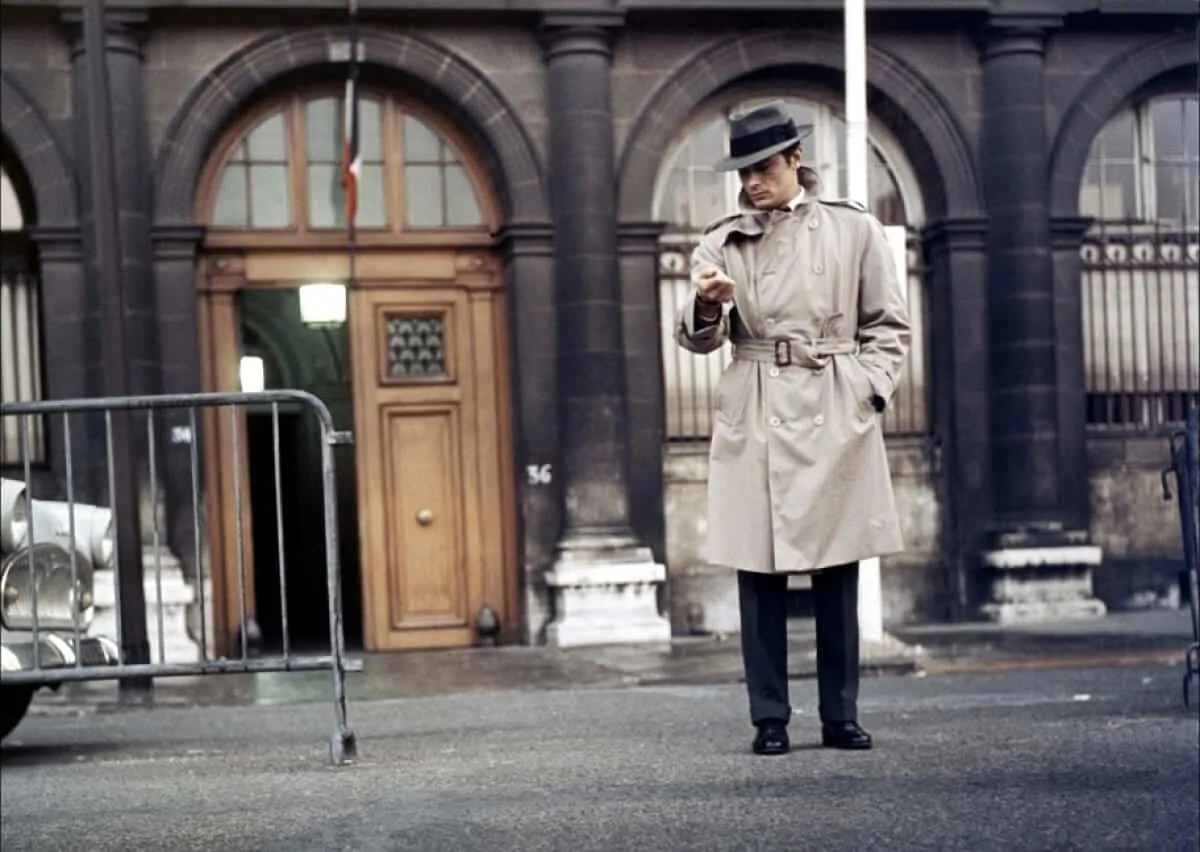
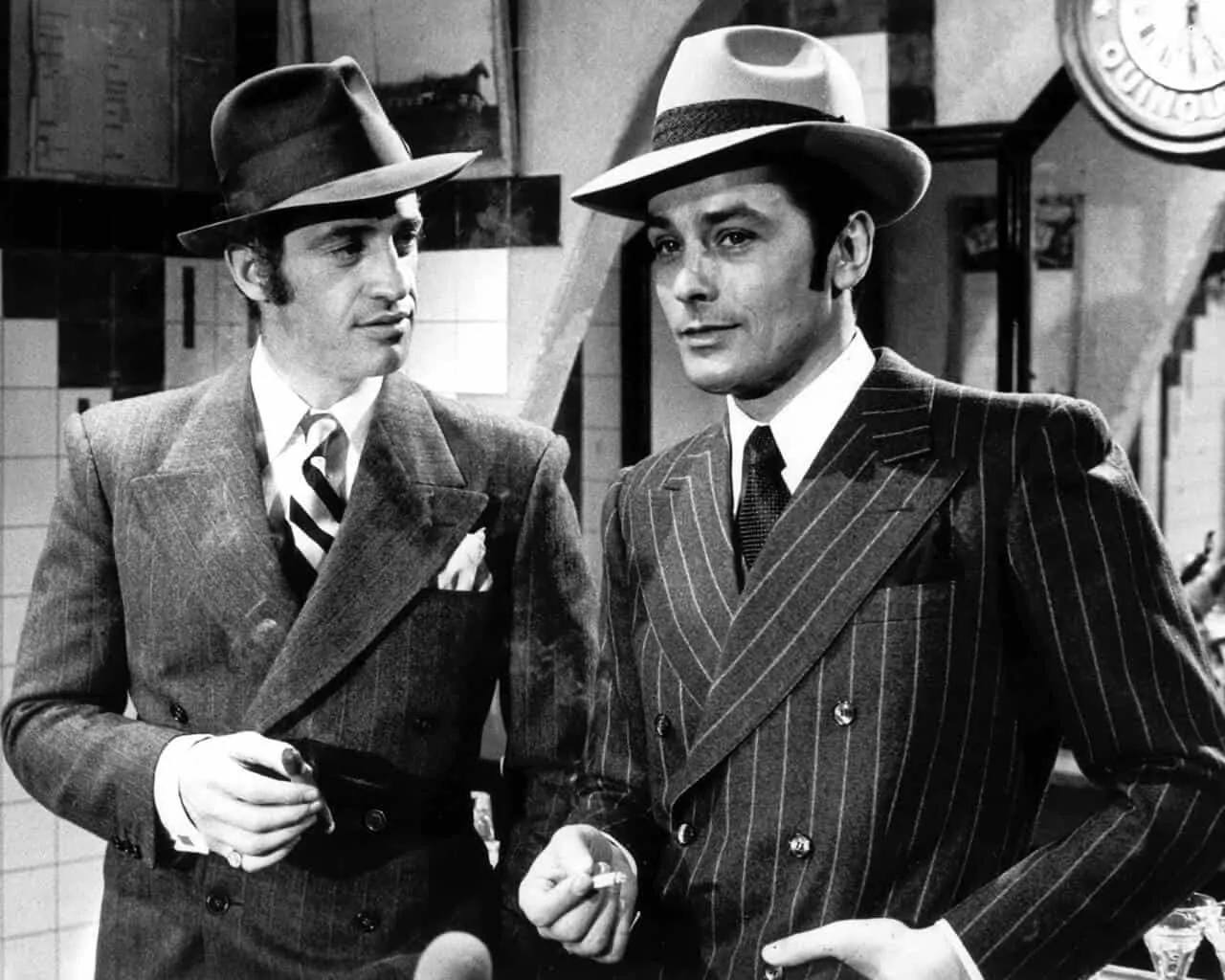


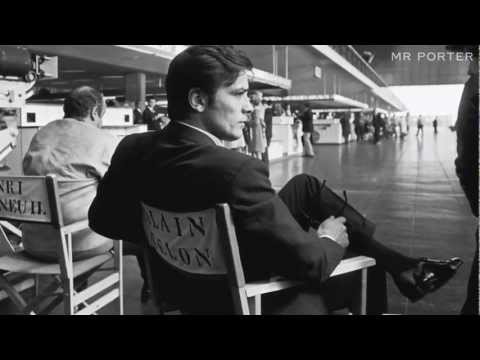
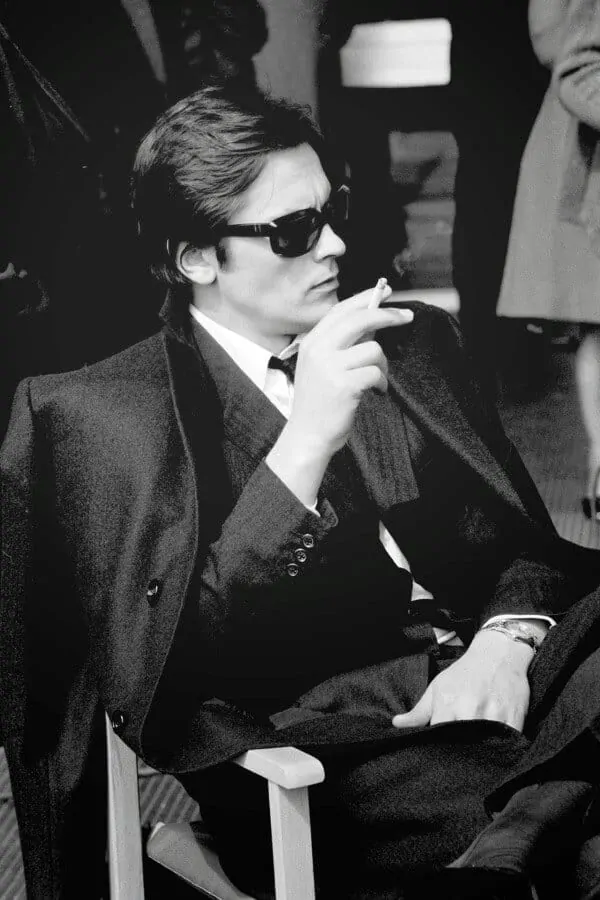
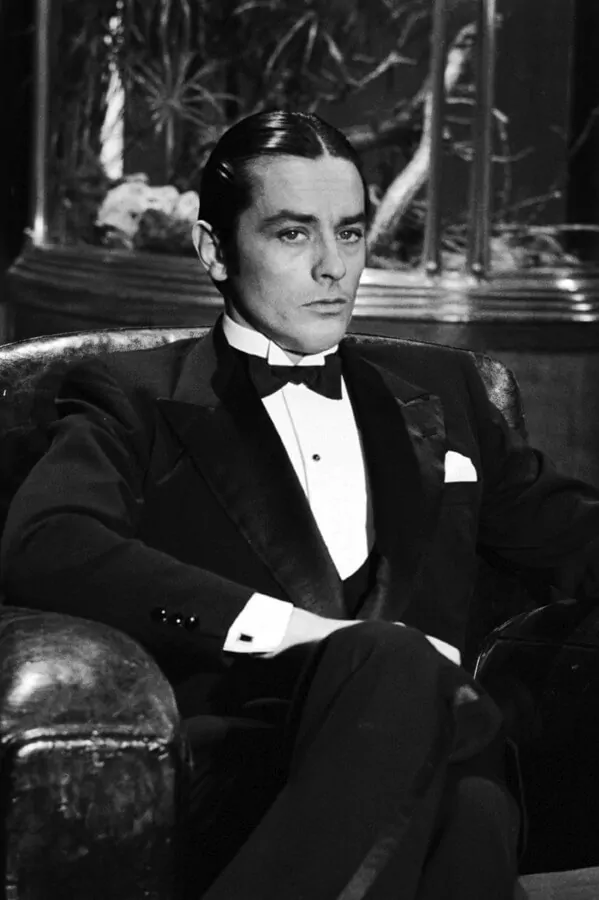


Alain Delon Classic!
Talking on Alain Delon’s style per se, I think that his best looks comes from his casual wear as portrayed on “Purple Noon.” In that movie, he masters what we could call the “Riviera style”, on a very stylish and timeless manner – every time I go on holidays in southern France and in Italy, I used those looks as inspiration.
Charles Allen
Daytona Beach, Florida
Another good read ; I remember doing to the movies to see Borsalino ( you can still one . ie the hat ) and the movie knocked me out .
I have 2 copies of the LP soundtrack and play them still .
Cheers
Mark